The Costa Brava, or "Wild Coast," stretches 200km from Barcelona to the French border, offering a more rugged and authentic Mediterranean experience. This Catalan coastline features dramatic cliffs, hidden coves (calas), medieval villages perched on hillsides, and the artistic legacy of Salvador Dalí. With fewer crowds than southern Spain, discover pristine beaches, world-class cuisine, and charming fishing villages that have retained their traditional character.
Girona: Medieval Splendor and Culinary Excellence
Girona stands as Catalonia's best-preserved medieval city, its ancient walls enclosing centuries of layered history. The Jewish Quarter, El Call, ranks among Europe's finest with narrow cobblestone lanes and restored medieval architecture. Colorful houses line the Onyar River creating Girona's iconic postcard view. The city has earned global culinary fame through El Celler de Can Roca, repeatedly ranked among the world's best restaurants. Beyond fine dining, traditional Catalan restaurants serve local specialties throughout the atmospheric old town. Girona combines medieval beauty with contemporary Catalan culture.
Cadaqués: Dalí's Muse and Artistic Haven
Cadaqués captivated Salvador Dalí, who made this whitewashed fishing village his home and inspiration. The Salvador Dalí House-Museum in nearby Port Lligat reveals the artist's eccentric world and creative process. The village maintains authentic charm with Mediterranean architecture cascading down hillsides to rocky coves. Artists continue to be drawn to Cadaqués' unique light and dramatic landscapes. Intimate beaches, seafood restaurants, and art galleries create an atmosphere where creativity and coastal beauty converge. Cadaqués represents the Costa Brava's artistic soul.
Tossa de Mar: Fortified Beauty and Golden Beaches
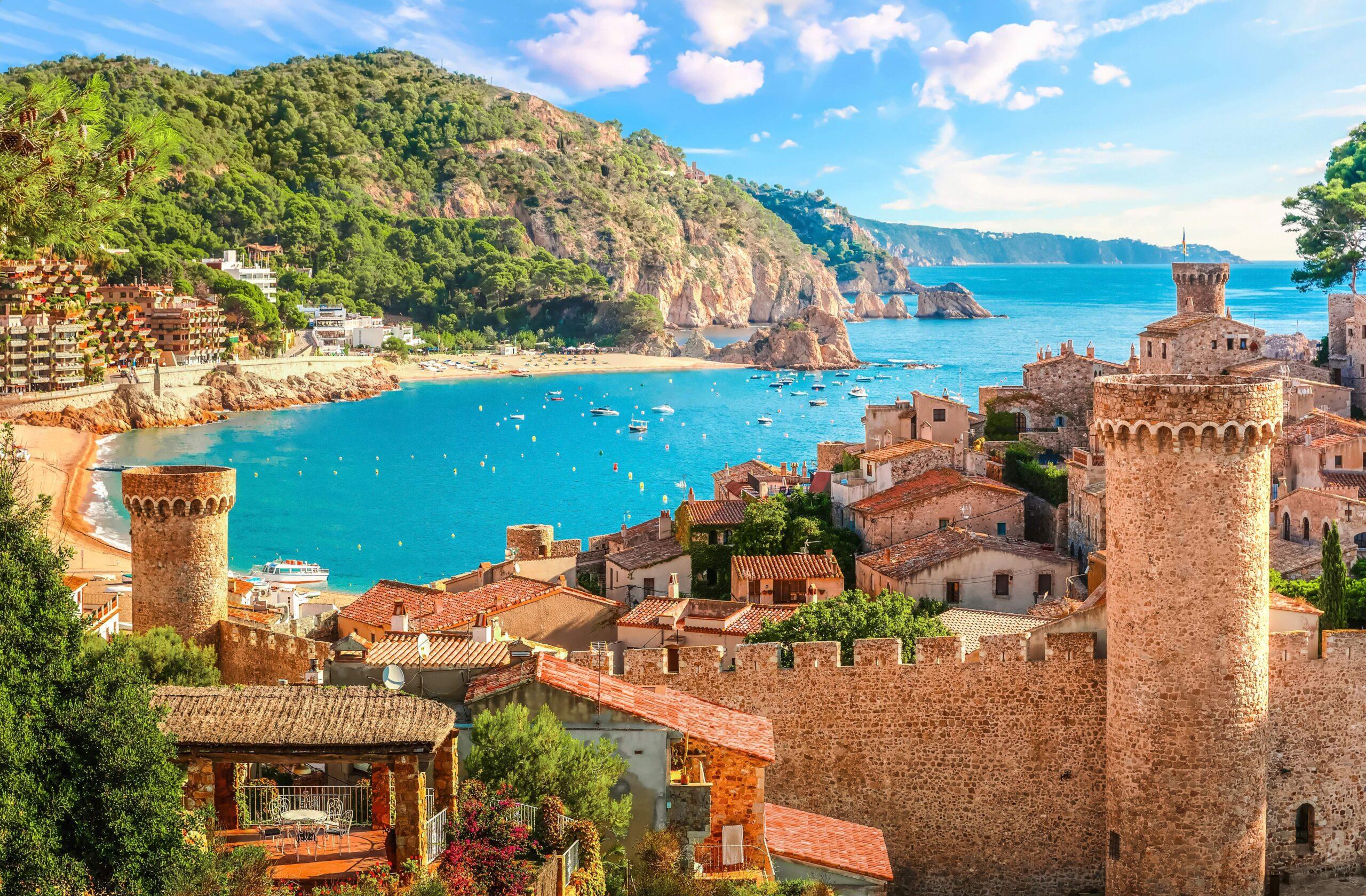
Tossa de Mar's Vila Vella (Old Town) remains Spain's only fortified medieval town directly on the Mediterranean. Ancient stone walls and towers crown the promontory overlooking golden beaches and turquoise waters. The town attracted artists in the early 20th century, including Marc Chagall who called it "blue paradise." Tossa balances historical atmosphere with beach resort amenities. The Camí de Ronda coastal path connects hidden coves north and south of town. Medieval architecture meeting pristine beaches creates Tossa's timeless Mediterranean appeal.
Begur: Hilltop Castle and Pristine Calas
Begur's medieval castle ruins overlook eight pristine calas, each offering crystalline waters and natural beauty. The town itself features colonial architecture from residents who made fortunes in Cuba and returned to build ornate homes. Beaches like Sa Riera, Aiguablava, and Sa Tuna remain relatively undeveloped, accessible via winding roads through pine forests. The Camí de Ronda coastal trail links the calas, offering spectacular Mediterranean vistas. Begur exemplifies the Costa Brava's combination of historical character, natural beauty, and preserved coastline away from mass tourism.
